ZETA at the 2026 Nuclear Communications Forum
By José Ignacio Gaona Cardona, President and CEO, ZETA
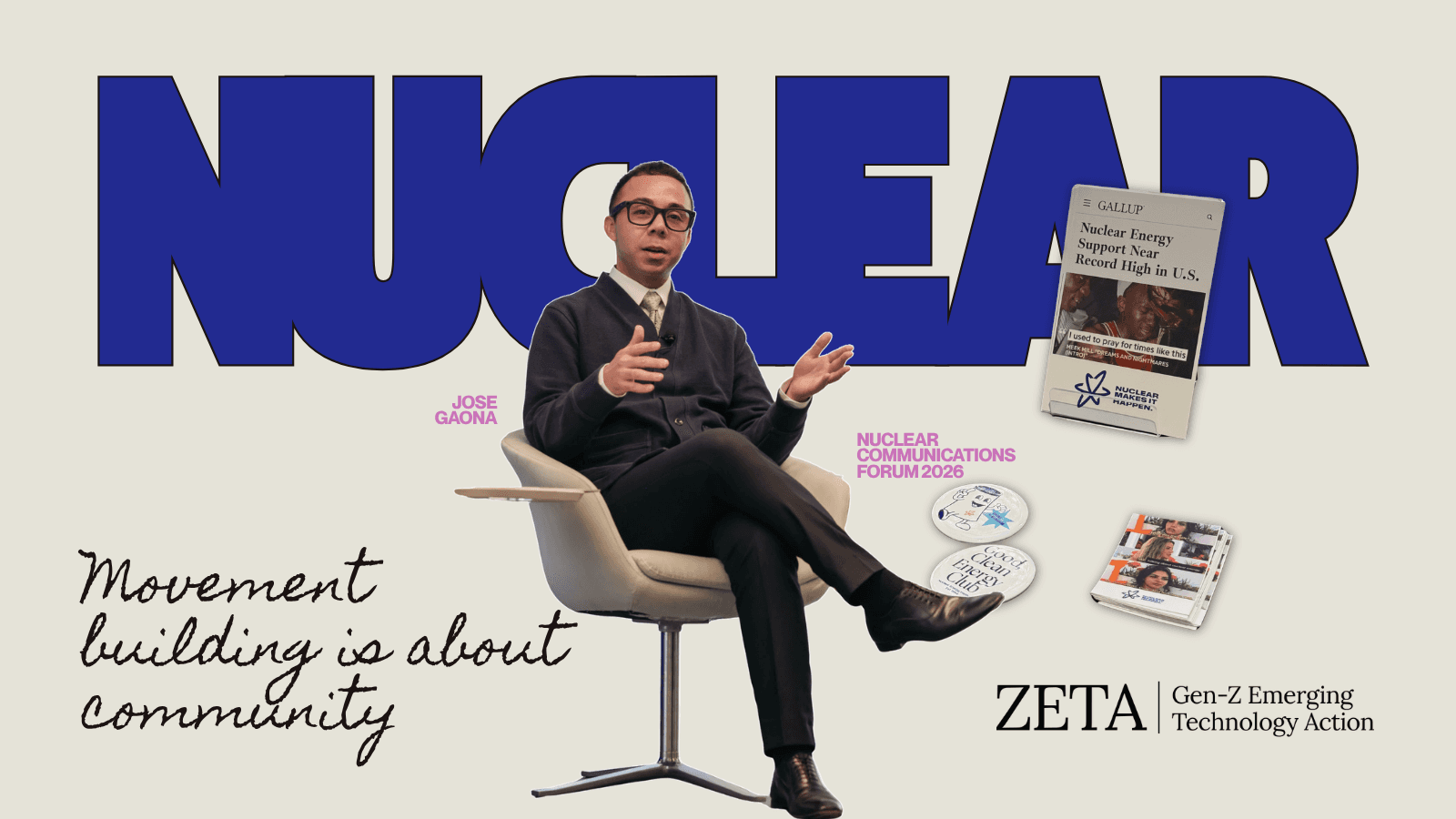
This April, I found myself in a different kind of nuclear classroom: the Nuclear Communications Forum. I joined the panel “Energizing the Next Generation: Perspectives from a New Generation of Advocates,” within a broader conversation on “The Next Generation of the Nuclear Narrative.” As Founder and CEO of ZETA, I spoke about ZETA as a home for Gen Z leaders who are ready to champion nuclear as reliable, always‑on, zero‑carbon power for a digital era that is both hungry for electricity and serious about climate. The forum’s theme, “Powering Tomorrow by Telling Our Story Today,” captured the core of our work: connecting nuclear’s technical strengths to stories that feel real to young people who live online, organize locally, and expect energy policy to reflect their values.
NCF brought together industry leaders, creatives, and emerging advocates in a way that underscored how narrative, media, and community engagement shape nuclear’s future. The discussions were less about polishing talking points and more about whether nuclear will feel, to my generation, like a distant technology or a lived, local reality driving climate and energy solutions.
On the panel, I also highlighted ZETA’s workforce and policy agenda. Our recommendations for reauthorizing the Workforce Innovation and Opportunity Act treat nuclear and clean energy as priority industries that should anchor Critical Industry Skills funds and sector partnerships. We are calling for clear, stackable pathways so Gen Z and opportunity youth can move into nuclear careers with real support, for Talent Marketplaces and Learning and Employment Records that make skills the organizing principle for opportunity, and for employer‑directed programs that co‑design apprenticeships and in‑house academies with utilities, vendors, and educators. Equity is central: we want strong nuclear pipelines through community colleges, HBCUs, HSIs, Tribal colleges, and other institutions that have long served students at the margins of energy debates, and we see Nuclear Workforce Innovation Leader designations as a way to spotlight training programs that deliver solid wages, placements, and measurable gains.
I also spoke about how ZETA is helping industries rethink third‑party engagement with younger demographics. My appointment to the AT&T Consumer Advisory Panel is one example of how we are opening channels for utilities, telecommunications companies, and vendors to engage Gen Z as partners in infrastructure and digital access, not just as customers. In spectrum, broadband, and now nuclear, we are working to align corporate strategies with the needs of young people who will live with the consequences of today’s technology and energy decisions.
Looking back on NCF, it was more than a chance to talk about narrative. It was a space to link that narrative to the policies, partnerships, and pipelines that will determine whether nuclear’s clean‑energy promise is matched by a diverse, future‑ready workforce; and whether my generation sees itself not on the sidelines of that transition, but at its center.