De‑Risking Advanced Nuclear: How SMRs and the ARC Act Can Secure America’s Clean Energy Future

1) What is an SMR? How it differs from traditional reactors
Small Modular Reactors, or SMRs, represent the next step in nuclear innovation. Unlike traditional nuclear power plants that generate over 1,000 megawatts of electricity, SMRs are compact systems that typically produce under 300 megawatts each. A defining feature is their method of construction. Rather than being built entirely on site, SMRs are manufactured in factories and then transported for installation, reducing construction time and complexity.
The term modular reflects their flexibility. Multiple identical units can be added over time, allowing a community or company to begin with a single reactor and expand capacity as demand grows. This makes SMRs especially well suited for data centers, industrial facilities, and remote communities that need reliable, carbon free power without the scale or cost of a large plant.
SMRs also differ from conventional reactors in design and operation. Factory production improves quality control and reduces delays associated with on-site construction. Many designs rely on passive safety systems that use natural forces such as gravity and convection to cool the reactor without external power or human intervention. Their smaller footprint allows them to be installed on existing industrial sites, including retired coal plants that already have transmission infrastructure, cooling systems, and trained workers.
2) Why SMRs are the most compelling nuclear option today
The global energy system is changing rapidly. Countries must meet climate goals while supporting rising electricity demand from artificial intelligence, electric vehicles, and digital infrastructure. This shift has made reliable, carbon free base load power more important than ever, and SMRs offer a strong solution by combining established nuclear science with modern engineering.
One of their key advantages is construction efficiency. Traditional nuclear plants often take a decade or more to complete due to their size and complexity. SMRs are built as standardized modules in factories and assembled on site, allowing parallel production and faster deployment. This approach reduces financing costs and lowers the risk of delays that can derail projects.
SMRs also align well with modern energy users. Data centers require continuous clean power, while industries such as hydrogen production, steel, and chemical manufacturing need both electricity and high temperature heat. SMRs can meet both needs. They are also well suited for military bases and remote areas that require secure, self-sufficient energy systems.
Operational simplicity further strengthens their appeal. Standardized designs and passive safety features reduce staffing requirements and maintenance complexity, helping utilities manage workforce constraints while lowering long term costs.
SMRs also complement renewable energy. Solar and wind are essential for decarbonization but are inherently variable. SMRs provide consistent, zero emission power that can stabilize the grid when renewable output fluctuates. This combination enables a more reliable and balanced energy system.
3) Global momentum and the risk of U.S. delay
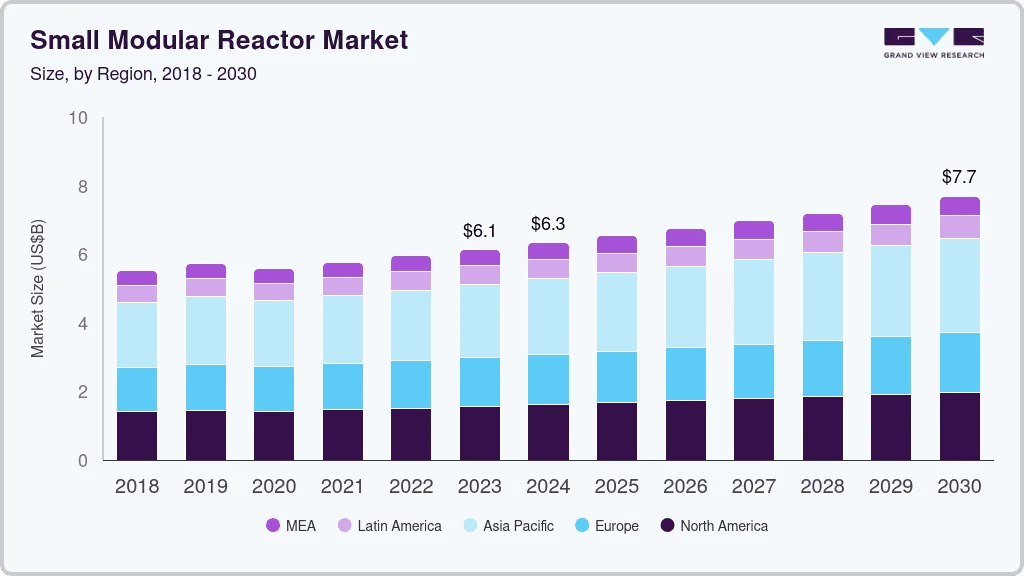
Around the world, SMRs are moving from concept to deployment. Governments are advancing projects in real time, recognizing that clean energy transitions require both renewables and dependable base load power.
Canada is leading early deployment. Its first BWRX 300 reactor is under construction in Ontario, supported by strong coordination between federal and provincial governments, regulators, and utilities. This alignment has streamlined licensing, financing, and siting, creating a clear path from policy to execution.
The United Kingdom is pursuing SMRs through an industrial strategy that emphasizes domestic manufacturing and export potential. By fostering competition among developers and investing in supply chains, the UK aims to position itself as a global leader in SMR technology.
In Central and Eastern Europe, countries such as Poland, Romania, and the Czech Republic are turning to SMRs to replace coal plants while maintaining grid reliability. These efforts are tied to broader goals of energy independence and industrial modernization.
Asia is also advancing quickly. China has already deployed advanced reactor designs and is exploring new applications such as floating nuclear plants. Japan is reengaging with nuclear energy through plant restarts and support for next generation reactors, including SMRs.
Despite strong technical leadership, the United States risks falling behind. The challenge is not innovation but execution. Lengthy and uncertain licensing processes, limited domestic fuel supply for advanced reactors, and inconsistent policy signals have slowed progress. As a result, projects often stall after early development while other countries move toward full scale deployment.
Accelerating SMRs with the ARC Act
One promising step toward closing the gap between American innovation and deployment is the Accelerating Reliable Capacity (ARC) Act, bipartisan legislation led by Senators Jim Risch and Ruben Gallego to tackle the financing risks that have stalled new nuclear projects. Building first-of-a-kind advanced reactors and SMRs is capital-intensive, and unexpected delays or cost increases can quickly undermine even well-designed projects. The ARC Act responds by creating a risk‑reduction program within the Department of Energy that pairs enhanced financing terms with limited federal cost‑share support when qualified projects exceed their verified cost estimates, but only after the reactors are successfully placed in service.
Under the ARC framework, at least three advanced nuclear projects would benefit from improved loan guarantees and structured protection against cost overruns, helping break the project‑finance gridlock that keeps FOAK reactors stuck on the drawing board. By tightening project readiness requirements up front, on schedules, labor plans, and delivery methods, and incentivizing completion at the back end, the ARC Act is designed to protect taxpayers and ratepayers while still moving steel in the ground. For communities that need clean, reliable base load power, and for young people who will live with the consequences of today’s energy choices, this kind of smart, targeted policy is not a luxury; it is a prerequisite for leadership.
4) ZETA’s Roadmap: make SMRs a U.S. priority
If the United States intends to lead the future of clean energy, powering artificial intelligence, manufacturing, and resilient communities, it must elevate Small Modular Reactors as a national priority. Innovation alone will not secure leadership. Progress requires synchronized efforts across research, regulation, financing, and workforce development. ZETA believes that the United States has both the technical capability and the policy opportunity to lead the next generation of nuclear energy. What is needed now is not another pilot, but a focused plan for deployment at scale.
De risking the first builds is the first step. The initial SMR projects will set the tone for public confidence and private investment. The federal government should expand its loan guarantees and production or investment tax credits to support not just single demonstration projects but multi unit, multi site programs. It should also promote the conversion of retired coal power plants into SMR sites, reusing existing transmission infrastructure, skilled labor, and water resources. Each successful conversion will show that the energy transition is not about replacement, but about renewal.
Within this effort, ZETA strongly supports the Accelerating Reliable Capacity Act as a critical tool for reducing early mover risk for advanced nuclear and SMR projects. By requiring strong project readiness plans and tying support to successful completion, the ARC Act helps break the project finance gridlock that has stalled first of a kind reactors while still protecting taxpayers and ratepayers. ZETA views the ARC Act as a cornerstone policy for getting the first wave of advanced reactors built and online.
Fixing the fuel problem is equally urgent. No reactor can operate without a stable and affordable supply of fuel. The United States must establish a secure, commercial scale supply chain for High Assay Low Enriched Uranium, including conversion, enrichment, and fuel fabrication. A clear off take mechanism, backed by government and industry partnerships, would encourage private investment and provide reliability for developers.
Licensing reform is also essential. Innovation in design is meaningless if regulatory processes remain unpredictable. The Nuclear Regulatory Commission should be equipped to deliver transparent, time bound licensing milestones. A system of standardized fleet approvals and transferable design certifications would ensure that once a reactor design is proven safe, it can be deployed consistently across states. Predictability in regulation strengthens both safety and investor trust. As ARC supported projects move forward, licensing certainty will be just as important as financing support to ensure that timelines are credible and communities can trust the process.
To accelerate adoption, demand and finance must align. The federal government can mobilize data centers, Department of Defense installations, industrial users, and public utilities as long term energy buyers through cooperative purchasing agreements. These anchor customers can stabilize revenue expectations and unlock private capital for first of a kind projects. ZETA believes that these same anchor customers should be prioritized for participation in ARC eligible projects. Long term contracts from such buyers can work hand in hand with ARC Act financing safeguards to bring SMRs and advanced reactors from planning into operation.
Beyond technology and policy, the United States must invest in people and supply chains. The success of SMRs depends on welders, engineers, operators, and nuclear quality assurance professionals as much as on software or hardware. Public and private training programs should prepare the next generation of nuclear professionals while strengthening tier one and tier two suppliers responsible for building reactor components and digital control systems. Workforce development is not a side issue. It is national security. ZETA sees the ARC Act as one part of a wider strategy that includes investing in training opportunities for Gen Z and young professionals who will build, operate, and oversee these systems.
Finally, transparency and accountability must guide every stage of SMR deployment. Federal and state support should be tied to measurable progress on cost, schedule, and safety. Standardized data collection and public reporting will make learning curves visible and allow improvements to spread across the industry. As ARC Act projects advance, they should be held to clear reporting standards so lessons can be shared across regions and technologies and so communities can see concrete benefits in reliability, jobs, and emissions reductions.